Presence of Non-Suicidal Self-Injury in the Daily Lives of Young People in Spain: Social Media and Its Codes
Esther Martínez Pastor. Full Professor, Rey Juan Carlos University*
Raquel Moraleda Esteban. Sociologist and PhD candidate, Rey Juan Carlos University*
Laura Dryjanska. Psychologist and professor at Asbury University, Wilmore, Kentucky, USA
* Researchers from the COMKIDS research group at Rey Juan Carlos University (URJC), within which this study was conducted.
Globally, approximately 14 million episodes of self-injury occur each year (Moran et al., 2024). Non-suicidal self-injury (NSSI) refers to behaviors in which a person deliberately inflicts physical harm on the surface of their body as a way to regulate intense negative emotions and feelings (American Psychiatric Association, 2013). Its onset typically occurs during adolescence (ages 12–16) (Muehlenkamp et al., 2018), although young adults (ages 18–29) are not free from risk, as they also engage in NSSI. A recent study estimates a prevalence of 13.22% among Spanish university students (Schmidt & Briones-Buixassa, 2023).
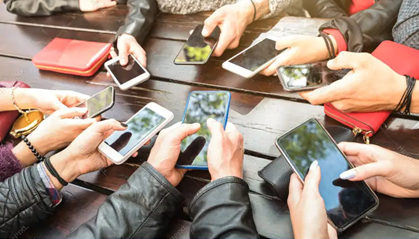
Recently, it has been discovered that there are digital communities worldwide where NSSI-related content is shared (Martín & Atauri, 2024). Young people create groups on social media platforms (TikTok, Instagram, and X/Twitter) where they exchange all kinds of autobiographical content about NSSI: advice, methods, wound care, emotional states, etc. (Martínez, Atauri & Simón, 2025). To do so, they have developed a complex coded language made up of symbols, hashtags, and abbreviations that only they understand, making the content unintelligible to those unfamiliar with it—especially adults—and helping them avoid content removal by platforms. The volume of content circulating online is such that 31% of young people in Spain report having learned about NSSI through social media (Martínez, Nicolás & Blanco, 2025).
This study aims to determine the extent to which young people in Spain are familiar with NSSI and its digital content, with the goal of gathering scientific evidence to highlight a harsh reality that is rarely discussed (Martínez-Pastor et al., 2023).
A survey was conducted with 1,017 students from various Spanish universities. The results showed that 12% of young people had engaged in self-injury at some point in their lives, and 79% knew someone who self-injures. Several risk factors were also identified that increased the likelihood of NSSI presence in youth environments: gender, sexual orientation, family structure, and field of study. Women, bisexual individuals (followed by homosexual individuals), young people raised in single-parent families or with separated parents, and students in science and health-related fields were more likely to engage in self-injury, as well as to know someone who does.
A concerning reality was also found regarding young people’s familiarity with NSSI-related codes used on social media. Twenty-four percent of respondents were familiar with the “barcode,” one of the most commonly used symbols associated with NSSI. Young people were able to define its meaning accurately, with descriptions such as:
“It’s like a metaphor referring to how cuts look on the skin, meaning the cuts are like the bars of a barcode.”
“It’s a metaphor used to refer to cuts made by victims on social media, using it so that platform mechanisms don’t block their messages when talking about self-injury.”
Another code studied was “butterflies,” known by 18% of respondents, who also defined it accurately. Some of their descriptions included:
“Butterflies are a symbol people use to stop cutting their skin. Cutting would symbolize cutting the butterfly’s wings, so people draw or tattoo them to stop this behavior.”
“A drawing of a butterfly represents a person they promise not to cut for; at least that’s what my friend told me when she said I was her butterfly.”
“A butterfly is a symbol that a person has survived a suicide attempt. I learned this from TikTok, not from someone close to me.”
In both cases, three risk factors were identified that increased familiarity with these codes: being female, being bisexual (followed by homosexual), and being a student in science or health-related fields. Arts students also showed notable familiarity with the “butterflies” code.
These results reveal a significant presence of NSSI in the daily lives of young people in Spain—a risk behavior that is highly present in their social circles and in the content they consume on social media, for which they understand and use specific codes. This evidence sharply contrasts with the general lack of awareness among the adult population regarding this behavior and its presence in the digital space.
Therefore, we hope that this work contributes to raising awareness about the emotional suffering currently experienced by young people, as well as the risks they face on social media. At the same time, we hope that studies like this help overcome the existing difficulties in discussing a reality that, although painful, must be addressed—since ignoring it only allows it to worsen.
Reference to the original work:
Martínez-Pastor, E., Moraleda-Esteban, R., & Dryjanska, L. (2026). Presence of non-suicidal self-injury in the youth environment: sociodemographic factors, frequency and metalanguages. A quantitative analysis. International Journal of Adolescence and Youth, 31:1, 2608761. https://doi.org/10.1080/02673843.2025.2608761
References:
American Psychiatric Association. (2013). Diagnostic and Statistical Manual of Mental Disorders (DSM-5) (5th ed.). American Psychiatric Association.
Martín Muñoz, D., & Atauri Mezquida, D. (2024). Comunidad digital de las autolesiones de los menores en TikTok. Aproximación metodológica cuantitativa y cualitativa. Revista Internacional de Cultura Visual, 16(4), 61–74. https:// doi.org/10.62161/revvisual.v16.5292
Martínez-Pastor, E., Atauri-Mezquida, D., & Simón De Blas, C. (2025). Analysis of youth self-harm profiles and narratives on twitter and tiktok. Lex Localis-Journal of Local Self-Government, 23(S5), 1081–1092. https://doi.org/10.52152/ 801355
Martínez-Pastor, E., Blanco-Ruiz, M., & Martínez-Rodríguez, L. (2023). Media treatment of self-injury in minors: Analysis of El País, El Mundo and ABC from 2012−2022. History and Social Communication, 28(2), 327–338. https://doi.org/ 10.5209/hics.84643
Martínez-Pastor, E., Nicolás Ojeda, M. A., & Blanco-Ruiz, M. A. (2025). Redes sociales y autolesiones. Percepción entre Jóvenes Universitarios en España. Visual Review, 17(5), 43–57. https://doi.org/10.62161/revvisual.v17.5911
Moran, P., Chandler, A., Dudgeon, P., et al. (2024). The Lancet Commission on self-harm. The Lancet, 404(10461), 1445–1492. https://doi.org/10.1016/S0140- 6736(24)01121-8
Muehlenkamp, J. J., Xhunga, N., & Brausch, A. M. (2018). Self-injury age of onset: A risk factor for NSSI severity and suicidal behavior. Archives of suicide research. https://doi.org/10.1080/13811118.2018.1486252
Schmidt, C., Briones-Buixassa, L., Nicolaou, S., Soler, J., Pascual, J. C., & Vega, D. (2023). Non-suicidal self-injury in young adults with and without borderline personality disorder: The role of emotion dysregulation and negative urgency. Anales de Psicología/Annals of Psychology, 39(3), 345–353. https://doi.org/10.6018/analesps.492631